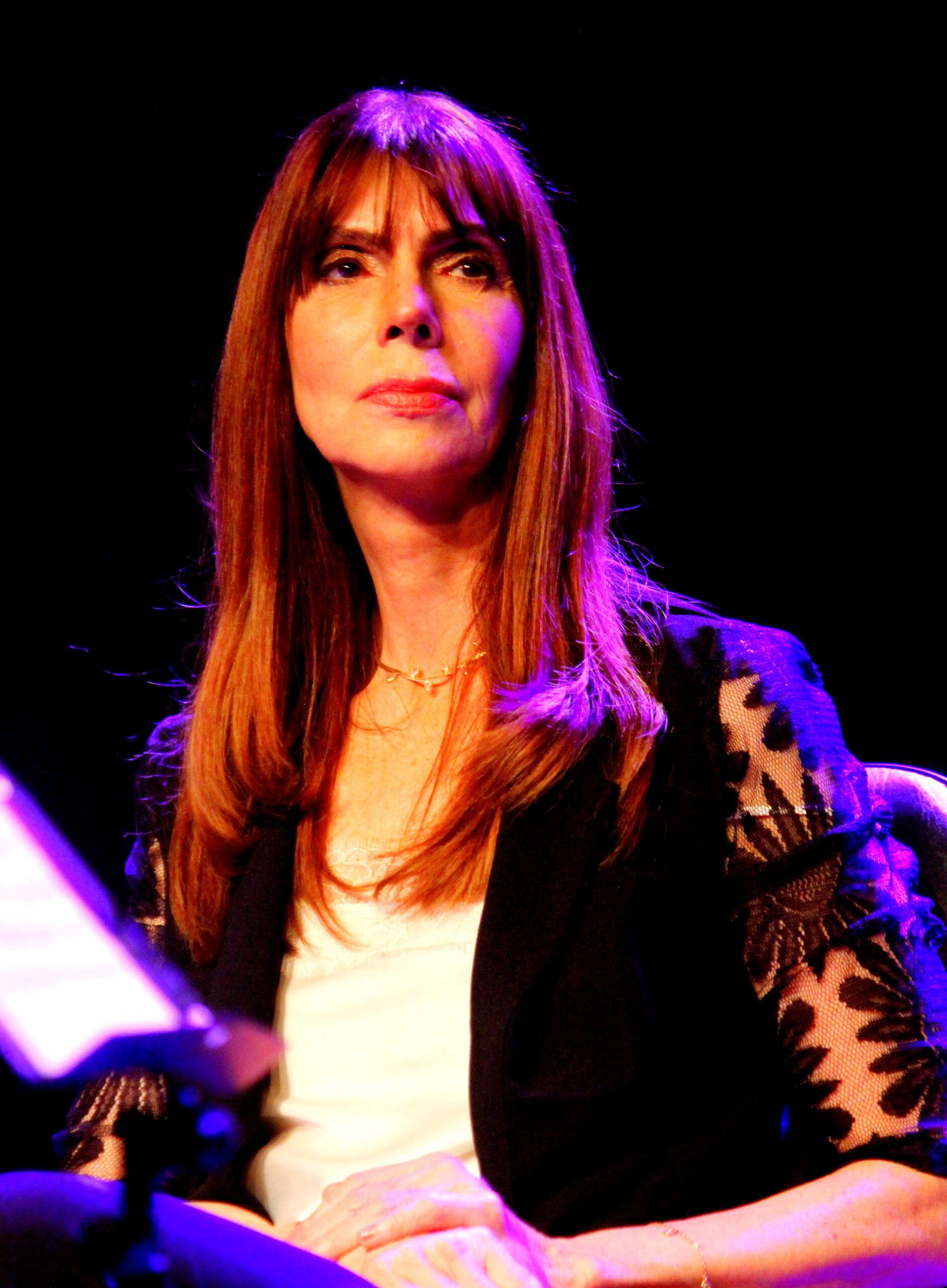
Brazilian poet and musician Denise Emmer lança livro de contos em prosa-poética que explora solidão, travessia e realismo mágico em 17 histórias.
A mosaic of poetic short stories
Writer, composer and cellist, and winner of the Alceu Amoroso Lima Poesia e Liberdade Award 2021, Denise Emmer releases her new book “Só os loucos batem palmas para o céu” (Editora Cavalo Azul). Once again, she blurs the lines between prose and poetry to create a mosaic of narratives that echo as scores, sonatas and visions. The book continues the dialogue with previous works such as “O cavalo cantor” and “O barulho do fim do mundo”, while deepening her aesthetic path.
Her writing flirts with magical realism and brings rare density to the stories. Across 17 short stories, the author distills themes such as solitude, abandonment and inner journeys. Language, rhythm and imagery guide the reader through a highly sensorial literary universe.
Solitude as an existential territory
In this collection, solitude emerges as a magnetic axis, not as mere absence but as an existential territory. As an epigraph, Denise chooses a fragment from “One Hundred Years of Solitude”, by Gabriel García Márquez: “He had really been through death, but he had returned because he could not bear the solitude.” The quote works as a key to the entire book.
Each story presents characters who, in different ways, return — from death, from oblivion, from childhood, from “never”. They are orphans, castaways and beings suspended between worlds. Their gestures take place on the reader’s intimate stage, where silence and introspection play central roles.
Denise says: “Sou uma poeta, que, por vezes, resolve sair da sua métrica para viver algumas aventuras. Ao escrever estas histórias, eu as vivo intensamente. Sou, ou parte do enredo, ou a observadora que narra os acontecimentos sem entrar nas polêmicas. Para mim, escrever contos é uma forma de viajar sem sair do quarto.”
Titles that open doors to metaphors
The story titles already suggest a universe of enigmas and metaphors. Among them are “A mulher que dançava”, “Senhor solidão”, “Palco das criaturas”, “As despedidas do Nunca” and “A árvore Sonâmbula”. Other texts include “Abraço eterno”, “O mosteiro do penhasco”, “O homem triste” and “A senhora de todas as vestes”.
The list also brings “Amor elevado a infinito”, “Anônima”, “Meu Kilimanjaro”, “O homem com pressa”, “Casal de bandoleiros”, “Abandonadas” and “Coração disparado”. Each title acts as a promise of image and a sensory invitation. As a result, the reader enters the book through a series of evocative thresholds.
Everyday scenes turned into metaphors
In “Senhor solidão”, Denise creates a suffocating domestic setting. A famous artist lives with his centenarian mother in a closed routine of shared meals, removing shoes and caring for each other. Everyday gestures slowly become metaphors of dependence and confinement.
In “Palco das criaturas”, a faceless pianist dresses in tails and waits for his entrance to perform a sonata that does not exist. His music awakens outcasts, mad people and forgotten old women, but there is no audience. When he finally plays for a packed hall, he is booed, the piano falls apart and the keys scatter.
The story reads as a parable about invisible art and the failure of glory. By sharing bread with a humble man on the streets, the pianist finds the dignity he never found in applause. The stage becomes a metaphor for the world, where we all play unheard sonatas to absent audiences.
Death, farewell and crossing in “As despedidas do Nunca”
In “As despedidas do Nunca”, the narrative reflects on death and farewell. The narrator walks through forests, stones and seas, saying goodbye to everything, including her parents transformed into statues. The text unfolds as a stream of consciousness, blending memory, dream and reality.
The airport scene, with flight Pterossauro bound for “Nunca”, produces a striking image. Death appears as a boarding call, with the final destination announced over the loudspeakers. Yet the story returns to intimacy when the narrator falls asleep embraced by the dog.
Here, death is not spectacle but withdrawal. The crossing takes shape as a whispered “adieu”, not an explosion. Denise intertwines farewell and tenderness, shifting the focus from the spectacular to the deeply personal.
Lyrical density and a 17-movement sonata
The book reveals a writing style that combines lyricism and density, always searching for the sublime within everyday life. There is a constant investigation of silence zones and threshold experiences. Denise does not simply tell stories; she makes them resonate like inner music.
The whole work can be read as a sonata that does not yet exist, in which each story is a movement — slow, allegro, adagio. The “end of the world” appears not as catastrophe, but as a passage to infinity. While reading “Só os loucos batem palmas para o céu”, the reader shares this experience of dissolution and flame.
In the end, many will likely identify with the title. Touched by the poetry of each story, the reader becomes one of those “mad” people who also clap for the sky. The gesture echoes as a response to solitude and an affirmation of the power of literature.
About Denise Emmer
Music has always played a central role in Denise Emmer’s artistic path. After graduating in Physics, she completed a Bachelor’s degree in Music (cello) and, in the early 1980s, emerged as a composer and singer. She has recorded several albums and performs as a cellist in orchestras and chamber groups.
Despite her versatility, poetry remains at the core of her work. She has received awards such as the Academia Brasileira de Letras Poetry Award 2009, the APCA Critics’ Award, the José Martí Prize (UNESCO) and the Olavo Bilac Prize (ABL). These distinctions underline her role in contemporary Brazilian poetry.
As a poet, Denise has taken part in key anthologies, including “41 poetas do Rio” and “Antologia da Nova Poesia Brasileira”. Her work has appeared in Poesia Sempre and in literary magazines in the United States, Turkey and Spain, with translations by Alfredo Pérez Alencart. She also joined the XXVI Encuentro de Poetas Ibero-Americanos 2021, in Salamanca.
Her texts integram projetos como a Antologia Selvagem (Ed. Cavalo Azul), Histórias brasileiras de cavalos (Ed. Maralto) e Antologia Ponte de Versos (Ed. Ibis Libris). Across these initiatives, she maintains a creative line that merges music, imagery and formal experimentation. Her work circulates through different media and literary circuits.
Book details
Título: “Só os loucos batem palmas para o céu”
Author: Denise Emmer
Publisher: Editora Cavalo Azul
Genre: poetic short stories
Length: 92 pages
Price: R\( 60,00**
Availability: online purchase through Editora Cavalo Azul