
Experts stress that skin cancer prevention and early diagnosis must continue throughout the summer, well beyond awareness campaigns.
Higher risk with intense summer sun
The calendar has turned, but the risk remains. With summer advancing through January and February, specialists from Hospital Mater Dei Salvador (HMDS) warn that skin cancer prevention must cover the entire season, not only the awareness month.
Daily use of sunscreen, reapplication during the day and physical barriers, such as hats and UV-protective clothing, remain essential measures. In addition, doctors advise avoiding sun exposure between 10 a.m. and 4 p.m., when ultraviolet radiation is strongest.
This guidance becomes even more important in periods marked by beaches, pools, outdoor sports and leisure in the sun. Thus, continuous protection is crucial, especially when UV exposure is more intense and constant during the summer months.
Most common cancer worldwide
Skin cancer remains the most frequent type of tumor in the world. Estimates from the World Health Organization (WHO) indicate more than three million new cases of non-melanoma skin cancer and around 130,000 melanoma cases every year.
In Brazil, data from the Ministry of Health and the Brazilian Society of Dermatology show that the disease accounts for about 30% of all cancer diagnoses. There are more than 220,000 new cases annually, with an even higher impact in regions with strong sunlight, such as Bahia.
In these areas, sun exposure is prolonged and cumulative throughout the summer, increasing the risk of skin damage. Therefore, the combination of climate, outdoor habits and insufficient protection creates conditions that favor the development of skin tumors.
Care must go beyond December
According to HMDS dermatologist Marilu Tiúba, risky behavior often increases after awareness campaigns end. She notes that many people mistakenly believe that care ends with the December Orange campaign.
“There is a false feeling that care ends with the December Orange campaign. In practice, January and February bring long periods of continuous sun exposure, often without proper protection. This increases the risk of lesions that can progress silently,” she warns.
For the specialist, attention must be reinforced throughout the summer and not restricted to campaign months. Furthermore, consultation with a dermatologist is recommended whenever suspicious changes appear on the skin, even if they seem mild.
Cumulative exposure and warning signs
In Bahia, the climate favors outdoor activities for most of the year, making the impact of sun exposure cumulative. Subtle signs, such as spots, wounds that do not heal or moles that change in appearance, tend to be overlooked, especially during summer.
“The earlier a skin change is detected, the greater the chances of simple treatment and cure. Delayed diagnosis can turn a small procedure into a more complex approach,” explains Marilu.
The dermatologist also highlights that people with darker skin are not immune to skin cancer, despite the natural protection of melanin. Unfortunately, in these patients, tumors are often diagnosed at more advanced stages, which worsens outcomes.
Surgery remains main treatment
When prevention fails, surgery remains the main therapeutic strategy. According to Cleydson Santos, coordinator of the Oncology Center at HMDS, the most frequent tumors, such as basal cell and squamous cell carcinomas, respond very well when removed early.
“Surgery is still the treatment of choice in most cases. When we can completely remove the lesion, with adequate margins, the prognosis is usually very favorable,” says the oncologist.
More aggressive tumors, such as melanoma and Merkel cell carcinoma, require faster and more intensive management. In these situations, surgery is often the first step in a broader treatment plan, frequently combined with other therapies.
Technology improves precision and recovery
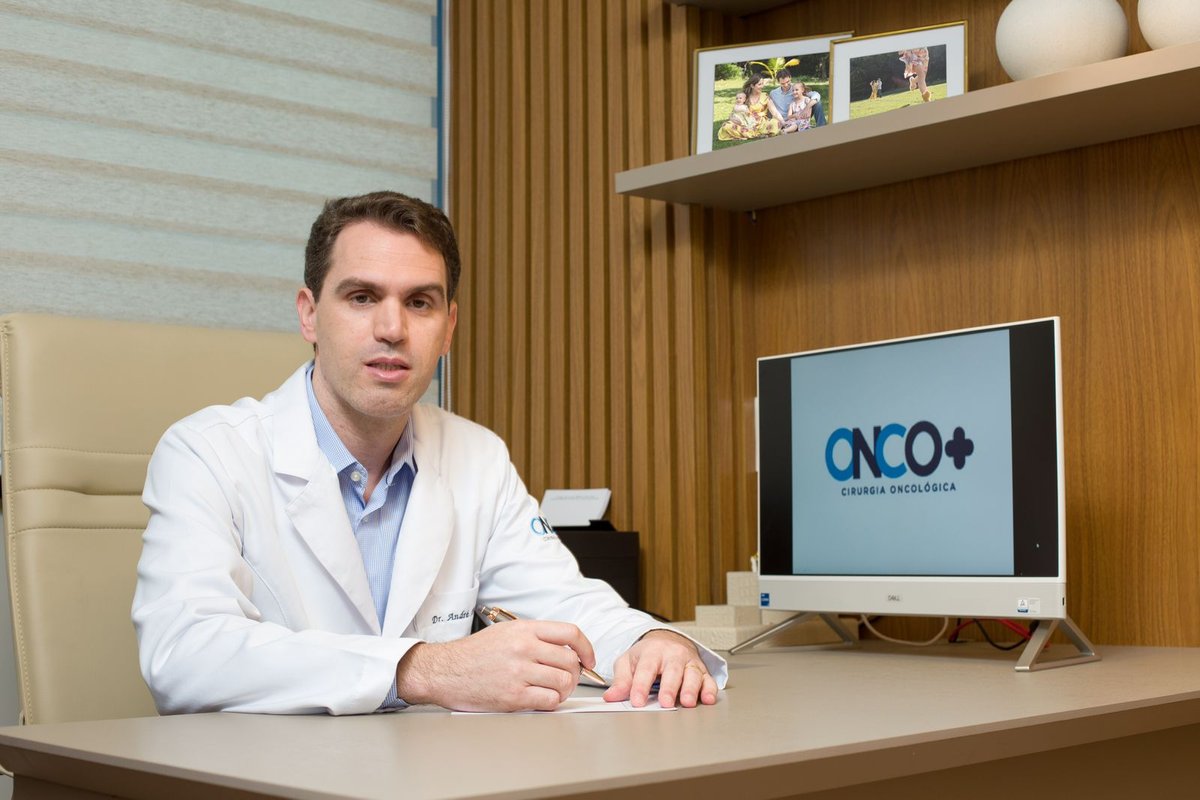
Technical advances have expanded surgical options in skin cancer care. HMDS surgical oncologist André Bouzas points out that increasingly precise procedures make it possible to remove tumors while preserving the maximum amount of healthy tissue.
“Micrographic surgery and frozen section analysis performed during the procedure increase oncologic safety,” explains Bouzas. In this way, surgeons can assess tumor margins in real time, reducing the likelihood of residual disease.
In selected cases, such as tumors with lymphatic spread, robotic surgery is also an important ally. It offers less surgical trauma, faster recovery and greater accuracy in complex anatomical regions.
Planning and follow-up are essential
For Cíntia Andrade Costa, coordinator of the Oncology Center at Hospital Mater Dei Emec (HMDE), successful treatment begins before the operating room and continues long after surgery. Careful planning is key to tailoring treatment to each patient.
“Planning involves a detailed clinical evaluation, imaging tests and selection of the most appropriate technique for each case,” Cíntia emphasizes. Moreover, multidisciplinary discussion helps define the safest and most effective strategy.
In the postoperative period, regular follow-up is crucial to reduce the risk of recurrence. It also allows early detection of new lesions, increasing the chances of cure and helping preserve both function and appearance.