
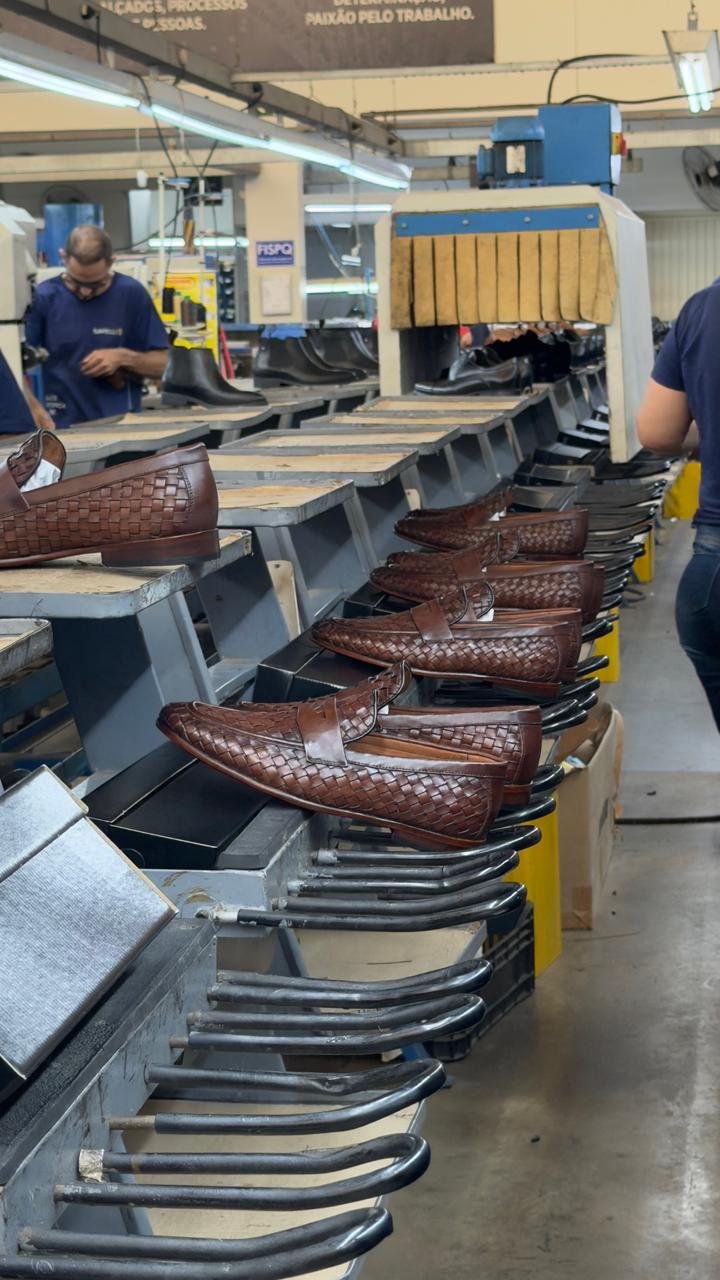
Luxury fashion turns to handcrafted pieces as an answer to fast consumption; Homem do Sapato’s new Estúdio highlights process, materials, and finishing.
In a landscape shaped by fast consumption and large-scale production, contemporary luxury is moving in the opposite direction. Handcrafted work is returning to the forefront as both a nostalgic revival and a direct response to standardization and immediacy.
Handmade pieces carry qualities that industrial output often cannot replicate, including identity and singularity. In addition, value shifts toward technique and the attention given to each stage of making.
The value of the human touch
According to the text, craftsmanship does not aim for mechanical perfection, but for excellence built through human gesture and continuous care. As a result, decisions about materials, process, and production pace shape how sophistication is perceived.
“Craftsmanship brings back the value of time and care, something fast consumption pushed into the background. In luxury, every choice matters: the material, the process, and the pace of production,” said Renata Braga, co-founder and commercial director at Homem do Sapato.
Estúdio, a new brand by Homem do Sapato
Within this movement, Estúdio emerges as Homem do Sapato’s new luxury brand. The concept treats process as important as the finished product, according to the co-founder.
Each piece is made by hand and follows the time required for execution. Then, form, finish, and functionality are designed to meet in balance within a model framed as more conscious.
“When handmade work returns to the center, it restores identity to pieces and creates a more conscious relationship between those who produce and those who consume,” Braga added.
Details, durability, and conscious choice
At Estúdio, luxury is expressed through precise stitching, selected materials, and meticulous finishing. In addition, the aesthetic is described as essential and timeless, with durability in mind.
The text frames the return of craftsmanship as a behavioral shift rather than a passing trend. Finally, knowing where a piece comes from, how it is made, and why it exists becomes part of its value.