
Projeto Albatroz’s Visitor Center in Cabo Frio is named an RBMA Advanced Post, strengthening conservation, research and environmental education.
Projeto Albatroz’s Visitor Center in Cabo Frio, Rio de Janeiro, has been named an Advanced Post of the Atlantic Forest Biosphere Reserve (RBMA). The recognition positions the institution as a strategic partner. In addition, it highlights its work in conservation, research and public outreach.
Opened in 2023, the center operates as a hub for environmental education, conservation, research and sustainable tourism in the Lakes Region. Projeto Albatroz is sponsored by Petrobras. In this way, the site strengthens its role as a regional reference point.
What the RBMA title means
The RBMA is described as the largest Biosphere Reserve on the planet. It spans more than 89 million hectares across 17 Brazilian states where the Atlantic Forest occurs naturally. However, the Advanced Posts program has existed since 1997 to expand protection and awareness efforts.
The program selects partners that regularly carry out at least two core functions. These include biodiversity protection, sustainable development and scientific knowledge. As a result, the title works as a credibility seal for conservation and environmental education.
As a counterpart, the Visitor Center joins a national network of Advanced Posts. In addition, it receives support through visibility, materials and coordination with other partners. Still, it must maintain and report its actions to the RBMA Council every four years for renewal.
Commitment to the Atlantic Forest
“The Atlantic Forest covers about 24% of our country’s territory and is home not only to extremely rich biodiversity, but to all of us. That is why we are very happy with the nomination as an Advanced Post; it is proof of the harmonious coexistence we have with the environment.”
Visitor Center coordinator Danielle Rocha said the recognition strengthens the institution’s commitment. According to her, the project works to conserve albatrosses and petrels. In doing so, it also supports the broader biome where it operates.
Sustainable tourism and the route
The Visitor Center promotes ocean literacy and knowledge about marine biodiversity. It engages students, educators, fishers, tourists and residents of the Lakes Region. Next, the experience connects audiences to albatross and petrel conservation.
Located on the shores of the Araruama Lagoon, the visit route was designed for all ages. It covers themes such as conservation, biology and fisheries. This way, the tour begins with the history of Projeto Albatroz.
After that, visitors walk the Mangrove Trail, a coastal ecosystem linked to the Atlantic Forest biome. The path introduces mangrove habitats and local fauna and flora. In addition, it highlights species found along the route, including crabs and birds.
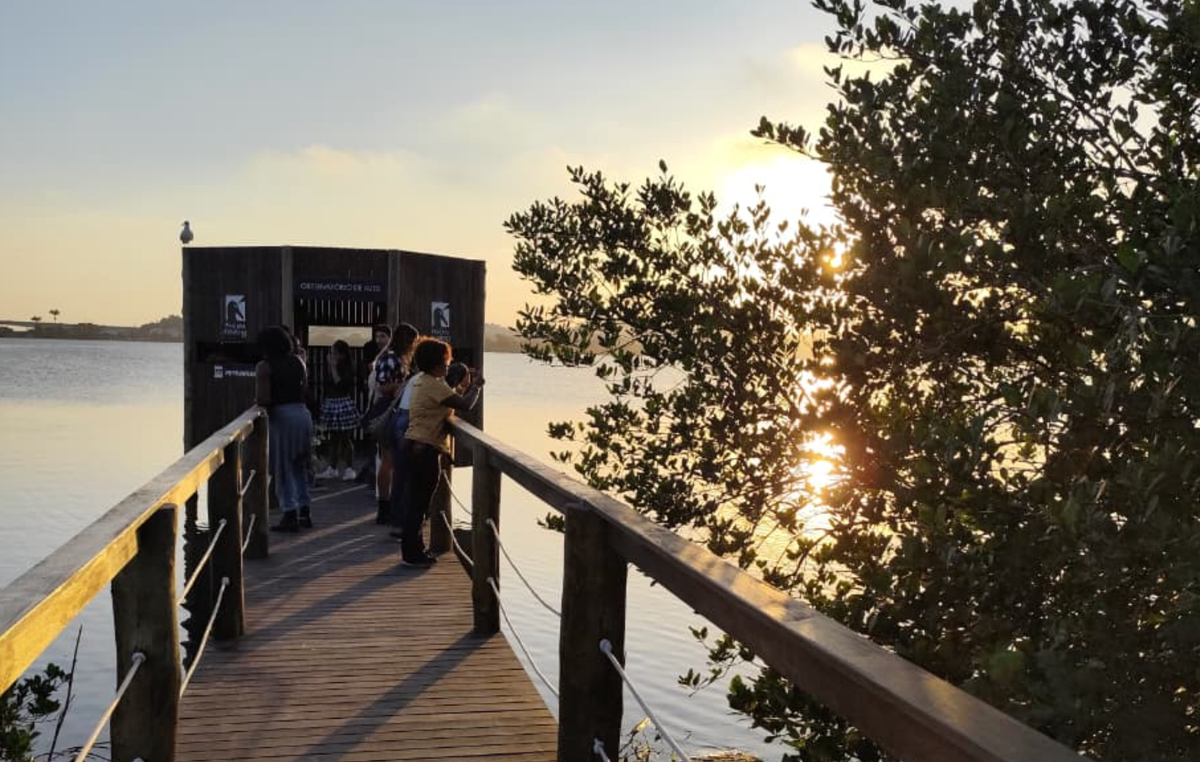
At the Ecosystems Walkway, visitors go around part of Araruama Lagoon. Meanwhile, they learn about regional environments, from mangroves to pelagic areas. A birdwatching observatory helps identify coastal and migratory species.
Next, the route continues through the Ocean Space, focused on species diversity. Finally, the Albatross Space explains albatross and petrel biology and their interaction with fisheries. It also encourages reflection on the public’s role in ocean conservation.
Beyond open visitation for tourists, the center runs environmental education activities with schools. It also hosts Coletivo Jovem Albatroz training sessions and events on research and public policy. In this way, it organizes artistic and citizenship initiatives with nearby communities.
About Projeto Albatroz
Reducing incidental capture of albatrosses and petrels is Projeto Albatroz’s main mission. The initiative has been sponsored by Petrobras since 2006. It began in Santos, São Paulo, in 1990 and is coordinated by Instituto Albatroz, a public-interest civil society organization.
Instituto Albatroz works with public authorities, educational institutions, fishing companies and fishers. As a result, it produces research to support public policies and environmental education. The work also aims to broaden public awareness of seabird conservation.
Today, the project maintains research bases in four Brazilian states. In 2023, it opened its first Marine Environmental Education Visitor Center in Cabo Frio. In addition, the institute runs the Beach Monitoring Program (PMP) along a 54 km stretch in the Lakes Region.
Projeto Albatroz estimates about 300,000 seabirds are incidentally caught by longline fishing each year worldwide. Of that total, it estimates 30,000 to 40,000 are albatrosses and petrels. Therefore, the institution takes part in national and international conservation bodies and plans.