“Encontro com Arariboia” positions Niterói as a national hub for Indigenous arts and cultures with seminars, exhibitions and a multi-arts festival in 2026.
Niterói sets out to lead Indigenous cultural promotion
The City of Niterói and its Municipal Secretariat for Cultures have launched the project “Encontro com Arariboia” (“Encounter with Arariboia”), which will make the city a national reference for Indigenous arts and cultures in 2026. The initiative includes a seminar, an exhibition and a multi-arts festival throughout the year.
Niterói’s name itself comes from the Tupi-Guarani language, and it is the only Brazilian city founded by an Indigenous leader: Arariboia, a Temiminó chief who played a key role in the Confederação dos Tamoios war, a decisive turning point in the country’s history. The project pays tribute to this ancestry while bringing it into today’s cultural and political debates.
Launch brings together Indigenous leaders and cultural institutions
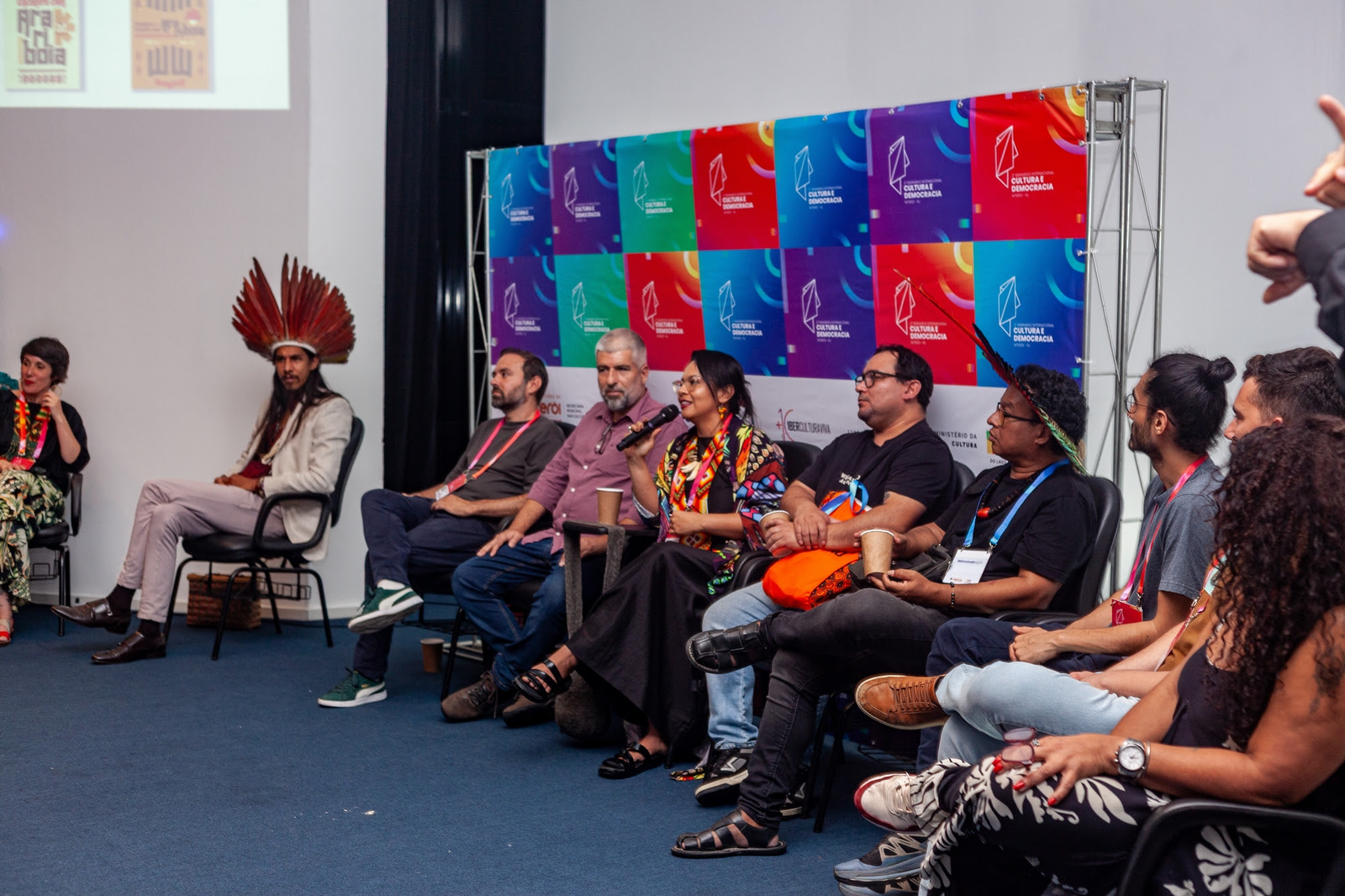
The project was officially launched on 4 December, with the participation of Indigenous artists, communicators and activists Daiara Tukano, Denilson Baniwa and Anapuaka Tupinambá. The initiative is sponsored by Niterói’s City Hall through the Municipal Secretariat for Cultures.
In a panel titled “Niterói Terra Indígena” (“Niterói Indigenous Land”), they were joined by Victor de Wolf, director of the Museum of Contemporary Art (MAC) of Niterói, and Leonardo Brandão, an Indigenous rights specialist and president of the Instituto Terra Verde, with cultural producer Priscila Danny moderating the discussion.
The opening remarks were delivered by Yan Mirim Ju, a Guarani Indigenous leader and coordinator for the promotion of Indigenous cultures at Brazil’s Ministry of Culture. The debate took place at Caminho Niemeyer, overlooking Guanabara Bay, a territory of deep historical and ancestral significance for Indigenous peoples.
Culture, democracy and Latin American networks
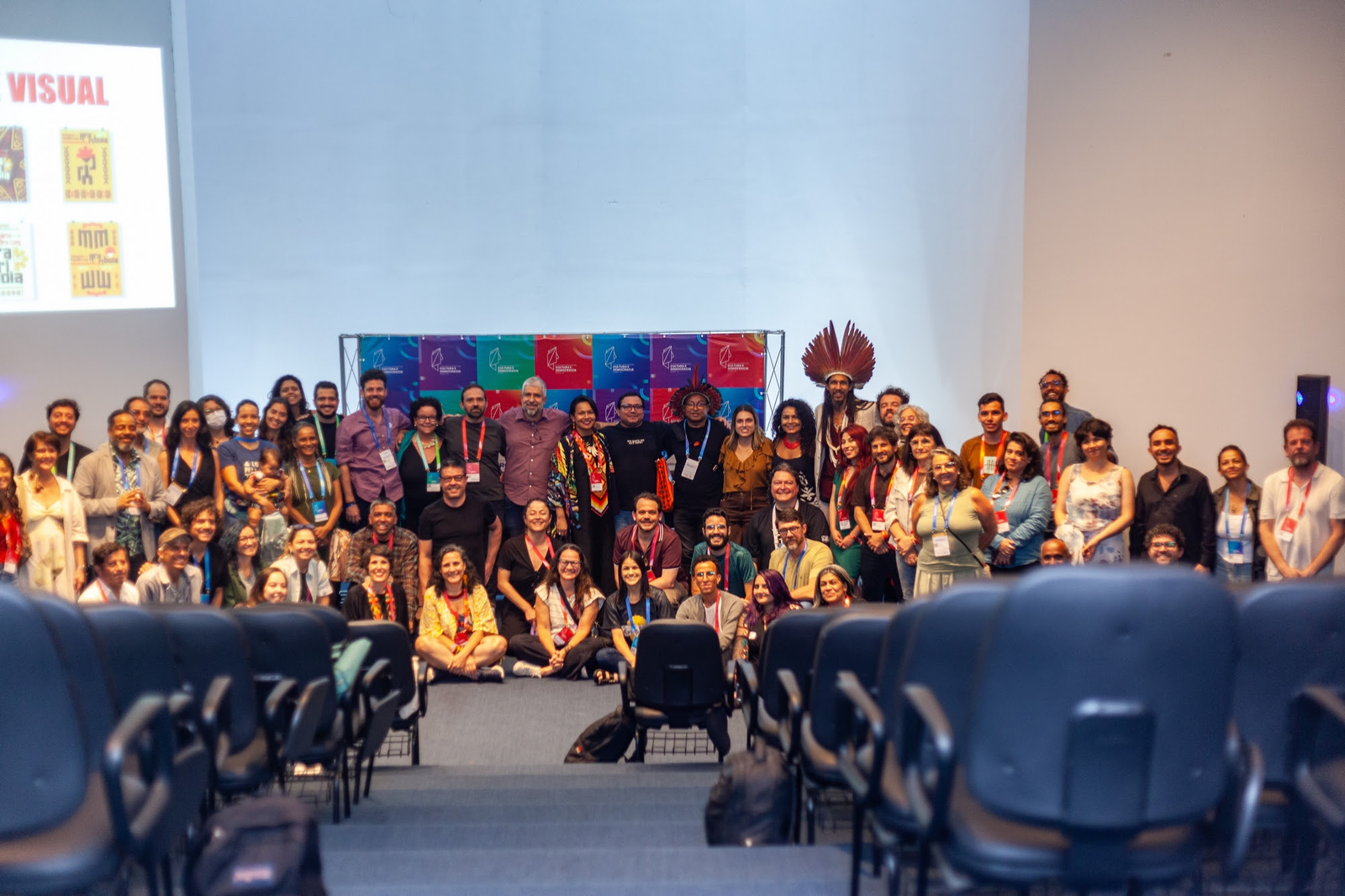
The activity marked the closing of the 2nd International Seminar on Culture and Democracy, organized by Niterói’s Secretariat for Cultures in partnership with the Casa de Rui Barbosa Foundation. It also hosted a meeting of the Network of Cities and Local Governments of the IberCultura Viva Program.
Delegations from more than 20 cities in six Latin American countries attended the event. These actions were part of the 30th Mercociudades Summit, a network founded in 1995 that brings together around 400 cities from 12 countries, representing over 120 million inhabitants.
For Niterói’s Secretary for Cultures, Leonardo Giordano, it is highly symbolic that a project about the memory of Arariboia and Indigenous peoples is launched in this context, which projects the city as a reference for local cultural governance in Latin America and beyond. He argues that Niterói must transform its Indigenous memory into a future-oriented project, centered on social care, environmental protection, cultural promotion and humanist values.
Niterói as living Indigenous territory
As one of the project’s curators, Daiara Tukano addressed the international audience and broadened the discussion to a continental scale. Switching between Spanish and Portuguese, she questioned labels such as “Ibero-American” and “Latin American”, stressing that, before any European reference, “this territory is Indigenous”.
Daiara described Indigenous peoples as “children of the forest, the river, the stone and the earth”. Pointing to Guanabara Bay, she evoked two powerful images: the arrival of the caravels, which failed to recognize Indigenous peoples as human, and the “great serpent” that, according to her people’s cosmology, stopped there for the first time, making this a sacred place.
Visual artist and curator Denilson Baniwa reflected on how official Brazilian history has used art to shape colonial memories, citing iconic paintings of Independence, Tiradentes and the Paraguay War. He argued that contemporary Indigenous art now challenges and reclaims these images, exercising a strong transformative power.
Denilson also spoke about his personal connection to the city: “I am from the Rio Negro region, but I chose Niterói as my home. In my people’s cosmology, Guanabara Bay is linked to sacred places of our origin. For us, humanity begins here.” About the upcoming exhibition “Ohpeko Ditara: Travessias da Guanabara”, which will be part of the project, he said the goal is to gather artists from multiple nations to rethink Brazil’s history “starting from our own names, cosmologies and territories”.
Symbolic reparation and Indigenous presence in public policy
MAC director Victor de Wolf revisited the city’s symbolic trajectory and the role of cultural institutions in both perpetuating and confronting historical erasures. He acknowledged that the museum, as a major city landmark, contributed to the erasure of Indigenous symbols such as the Itapuca Rock and the statue of Arariboia.
Victor argued that if the museum took part in that erasure, it now has the responsibility to contribute to reparation, by promoting critical debates and permanently including Indigenous artists in its collection. He recalled MAC’s first Indigenous art exhibition, opened by chief Raoni in 2019.
Indigenist Leonardo Brandão highlighted the current Indigenous presence in the metropolitan region, often made invisible in official narratives. He stressed that Arariboia should not be framed as a traitor or romantic hero, but as a complex leader of his time, and that Niterói’s status as the only Brazilian city founded by an Indigenous leader is a source of pride and a call to reconnect with a living ancestry.
Indigenous communicator Anapuaka Tupinambá emphasized the need for Indigenous participation in public policies and cultural councils. He pointed out the challenges posed by structural racism in urban contexts and described what is happening in Niterói as part of a process of “memoriância” — memory actions carried out in the present.
Ministry of Culture delegation underscores national relevance
The event was attended by a delegation from Brazil’s Ministry of Culture, reinforcing the national importance of “Encontro com Arariboia”. Among those present were Alexandre Santini, president of the Casa de Rui Barbosa Foundation, and managers responsible for national diversity and community culture policies.
Also present were João Pontes, director of the National Cultura Viva Policy, Karina Gama, director for the Promotion of Cultural Diversity, Giselle Dupin, diversity promotion coordinator, as well as journalist and consultant Edu Nascimento and Niterói’s deputy secretary for Cultures, Matheus Lima. International delegations, artists, local governments, community organizations and cultural institutions followed the discussions.
Co-created programming throughout 2026
Starting in March 2026, “Encontro com Arariboia” will unfold through a broad listening and consultation process with artists, institutions, Indigenous peoples and communities in Niterói and surrounding areas, as well as national and international cooperation networks.
The goal is to design the program in a collective and participatory way. Closing the debate at Caminho Niemeyer, curator Daiara Tukano stated that a truly meaningful democracy must recognize the right to territory and that Indigenous cultural policies are forms of historical reparation, not concessions.
She challenged the audience to imagine Niterói hosting a major Latin American Indigenous Art Biennial, arguing that “it is time to show the world that our history does not begin in 1500”. With that, the project positions the city as a forward-looking hub for Indigenous protagonism in Brazil and across the continent.
Service – Encontro com Arariboia
Encontro com Arariboia
Venues: Centro Eco Cultural Sueli Pontes, Museum of Contemporary Art (MAC) of Niterói and Caminho Niemeyer
When: Throughout 2026